Connect with us

Artificial Intelligence

VoidLink Linux Malware Framework Built with AI Assistance Reaches 88,000 Lines of Code

Published

on

A sophisticated Linux malware framework, VoidLink, has been identified as one of the first major malware projects largely developed with the assistance of artificial intelligence (AI). According to Check Point Research, operational security missteps by the malware author provided clues indicating that AI played a central role in the malware’s creation.

VoidLink, written in the Zig programming language, is designed for long-term, stealthy access to Linux-based cloud environments. Researchers say the framework originated from a Chinese-affiliated development environment, though no confirmed real-world infections have been reported so far. By early December 2025, the malware had grown to more than 88,000 lines of code, reaching its first functional implant in under a week.

Evidence of AI-Driven Development

A follow-up analysis by Sysdig highlighted features consistent with AI-assisted coding:

  • Uniform, highly systematic debug outputs across all modules
  • Placeholder data like “John Doe” typical of large language model (LLM) training examples
  • Consistent API versioning (_v3 suffixes across modules)
  • Template-like JSON responses covering every field

Check Point concluded that a skilled developer leveraged AI to generate boilerplate code, logging, and templates, while supplying domain expertise in kernel development and red team operations. The AI model appears to have been guided through Spec Driven Development (SDD), where the human defined the architecture and tasks, and the AI generated and tested the code accordingly.

Development Timeline and Workflow

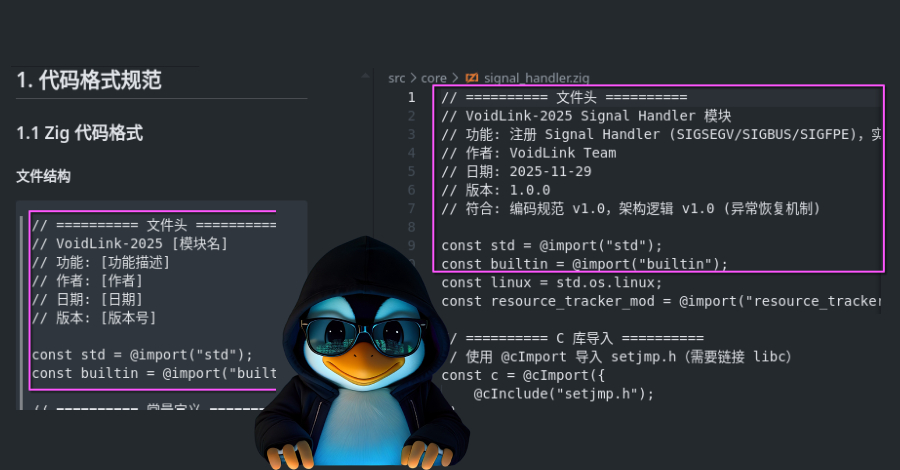
Analysis suggests that work on VoidLink began in late November 2025, using a coding agent called TRAE SOLO. Researchers found helper files, sprint schedules, and coding guidelines in Chinese that aligned closely with the malware’s source code, indicating that the AI followed structured development instructions to build the framework.

The workflow allowed a single actor to produce a highly sophisticated malware toolkit in days, a task that previously would have required a coordinated team of specialists. Check Point replicated the workflow using the TRAE IDE and confirmed that the AI-generated code closely mirrored VoidLink’s implementation.

Implications for Cybersecurity

Experts warn that VoidLink demonstrates how AI is accelerating malware development, lowering barriers to entry for cybercrime. As Eli Smadja, Group Manager at Check Point Research, noted:

“AI enabled a single actor to plan, develop, and iterate a complex malware platform in days — something that previously required coordinated teams and significant resources.”

Group-IB, in a recent whitepaper, described AI as catalyzing a “fifth wave” in cybercrime, industrializing attacks by turning malware development, impersonation, and exploitation into on-demand services. Dark web offerings of AI-powered tools and synthetic identity kits have surged, enabling attackers to automate sophisticated operations at scale.

Craig Jones, former INTERPOL director of cybercrime, summarized the risk:

“AI hasn’t created new motives for cybercriminals — money, leverage, and access still drive the ecosystem — but it has dramatically increased the speed, scale, and sophistication of attacks.”

VoidLink represents a critical warning for organizations: as AI-assisted malware accelerates, cybersecurity defenses must adapt to rapidly evolving, high-complexity threats targeting cloud and Linux environments.

Advertisement
Click to comment

Leave a Reply

Your email address will not be published. Required fields are marked *

Copyright © 2023 Cyber Reports Cyber Security News All Rights Reserved Website by Top Search SEO