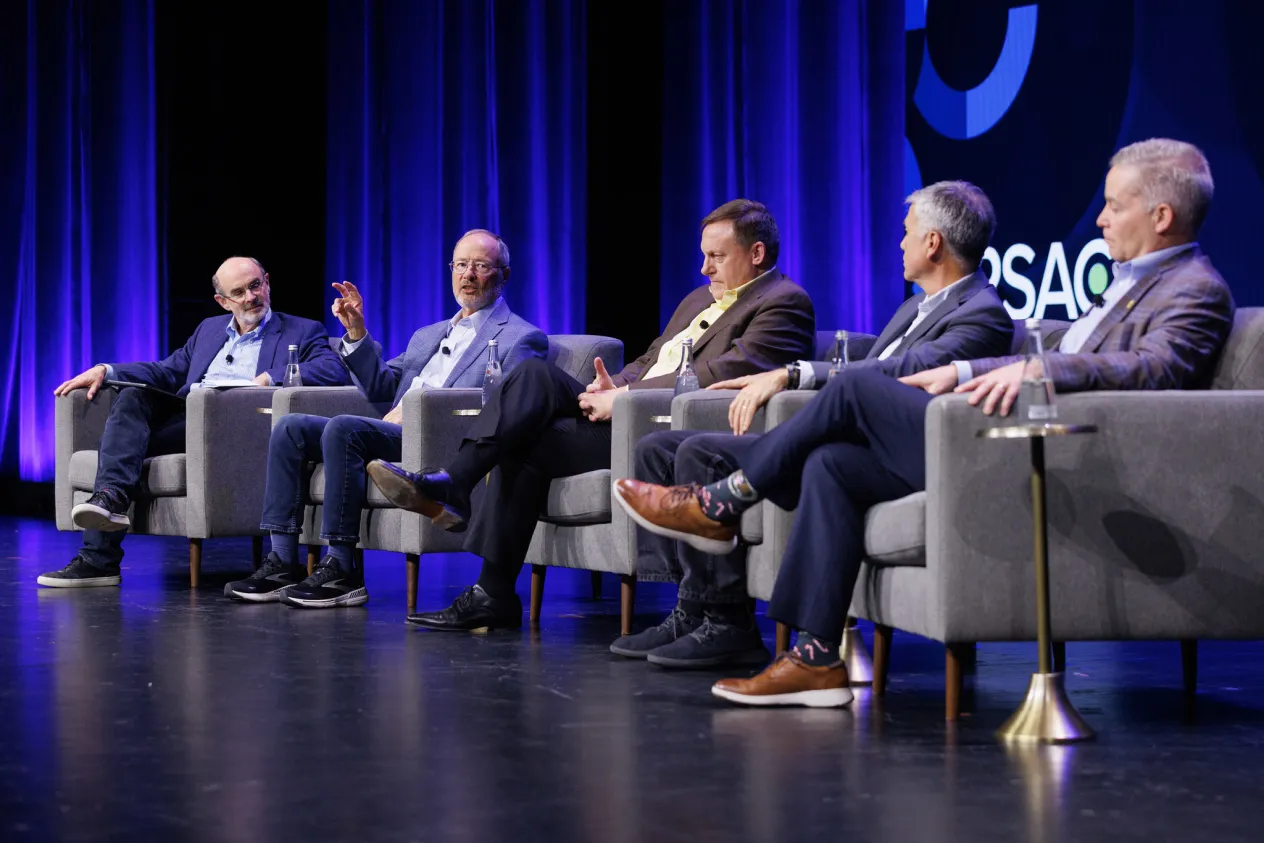
SAN FRANCISCO — At the 2026 RSA Conference, four former directors of the National Security Agency (NSA) voiced deep concern about the United States’ ability to maintain its cybersecurity advantage in an era of accelerating threats from China, cybercriminals, and artificial intelligence (AI).
Retired generals Keith Alexander, Mike Rogers, Paul Nakasone, and Tim Haugh, all former commanders of U.S. Cyber Command, highlighted a growing disconnect between the pace of cyber threats and the nation’s public-private response capabilities.
Growing Threats and Institutional Challenges
“We’ve become numb to it,” said retired Gen. Paul Nakasone, describing the scale of repeated cyber intrusions and the nation’s insufficient response. He emphasized that U.S. agencies, including CISA, the Joint Cyber Defense Collaborative, and NSA’s Cybersecurity Collaboration Center, are struggling to keep pace with rapidly evolving threats.
Retired Admiral Mike Rogers criticized governmental inaction and political division, noting that the U.S. lacks a unified federal privacy framework or comprehensive cybersecurity legislation. “We’re the largest economy in the world. We don’t have a single major piece of cyber legislation,” Rogers said, calling the situation “frustrating.”
AI and China Heighten Urgency
Retired Gen. Keith Alexander acknowledged that the U.S. has dedicated personnel working tirelessly to counter cyber threats but warned that emerging AI capabilities and China’s expanding cyber infrastructure pose new challenges. Retired Gen. Tim Haugh added that China has pre-positioned itself in critical networks and replicated intelligence-gathering capabilities, potentially outpacing U.S. defensive measures.
The former commanders highlighted the need for serious public-private collaboration, stressing that offensive cyber capabilities and proactive strategies are increasingly important to deter sophisticated adversaries.
Calls for Action
Rogers warned that the nation has yet to experience a cyber “trauma” that might force fundamental behavioral change. “We’re starting to accept this, in some ways, as the price of living in the digital age,” he said, stressing the importance of preparing before catastrophic consequences occur.
The discussion underscored an urgent need to modernize U.S. cyber defenses, enhance collaboration with private sector partners, and accelerate legislative and policy initiatives to secure critical infrastructure against rapidly evolving threats.