Cybersecurity researchers have uncovered a sophisticated malware campaign that combines fake online reviews, AI-generated promotional content, manipulated reputation systems, and thousands of fraudulent websites to distribute cryptocurrency-stealing malware.
The operation, identified by researchers at Check Point Research, demonstrates how cybercriminals are increasingly adopting digital marketing tactics commonly used by legitimate businesses to build trust and attract victims.
Malware Disguised as Crypto Trading Tools
According to investigators, the campaign promotes seemingly legitimate cryptocurrency-related software, including trading bots, token sniping tools, and gambling prediction applications. However, these programs allegedly contain hidden malware designed to hijack cryptocurrency transactions.
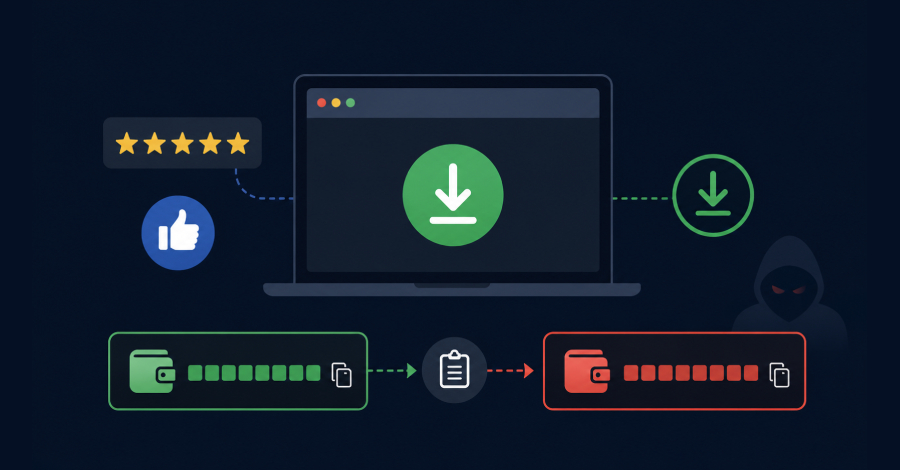
The malicious software reportedly targets both Windows and macOS users. Once installed, it continuously monitors clipboard activity and searches for cryptocurrency wallet addresses copied by victims.
When a wallet address is detected, the malware silently replaces it with an address controlled by the attackers, causing funds to be redirected without the victim’s knowledge.
Reputation Manipulation at Massive Scale
Researchers found that the threat actors invested heavily in creating an appearance of legitimacy across multiple online platforms. The operation allegedly relies on fake user accounts, fabricated reviews, inflated download statistics, and coordinated positive feedback to convince users that the software is trustworthy.
One notable aspect of the campaign involves attempts to manipulate malware reputation systems. Investigators discovered coordinated activity on file-scanning platforms where accounts allegedly posted favorable comments and positive ratings on malicious files to reduce suspicion among potential victims.
Security experts warn that such tactics can undermine community-driven security platforms that many users rely on to verify software safety.
GitHub and SourceForge Used as Distribution Channels
The campaign reportedly maintained multiple accounts on software-hosting platforms to distribute malware and cross-promote related projects. Researchers identified several repositories displaying signs of artificially boosted popularity, including inflated engagement metrics.
Suspicious activity was also observed on software download platforms, where unusually high download figures appeared inconsistent with the actual audience and supported operating systems. Analysts believe automated systems may have been used to create the illusion of widespread adoption.
AI-Generated Videos Enhance Credibility
To further strengthen the campaign’s credibility, attackers allegedly operated a dedicated YouTube channel featuring tutorial-style videos that promoted the malicious tools.
Researchers noted that many videos used AI-generated voiceovers and were accompanied by overwhelmingly positive comments, creating the impression of a large and satisfied user community. The channel reportedly attracted tens of thousands of subscribers and served as a key promotional asset for the operation.
Paid Media Promotion Raises Concerns
One of the most unusual findings involved the use of press release distribution services to publicize the software. Investigators found that promotional content was distributed through legitimate news syndication channels, allowing the campaign to gain visibility on reputable websites.
Cybersecurity experts say this tactic represents a significant evolution in social engineering, as criminals increasingly leverage trusted platforms to enhance the perceived legitimacy of malicious software.
Experts Warn of Emerging Threat Trend
Researchers believe the campaign reflects a broader shift in cybercrime strategies, where attackers focus not only on technical exploits but also on influencing public perception and trust.
By combining malware distribution with coordinated reputation management, fake endorsements, AI-generated content, and aggressive cross-platform marketing, threat actors can significantly increase the likelihood of successful infections.
Security professionals warn that similar techniques could eventually be used to distribute more dangerous threats, including information-stealing malware, ransomware, and advanced financial fraud tools.
Users are advised to verify software sources carefully, avoid relying solely on ratings or reviews, and use trusted security tools before downloading cryptocurrency-related applications or financial software.
The investigation remains ongoing as researchers continue tracking the infrastructure and online assets linked to the campaign.