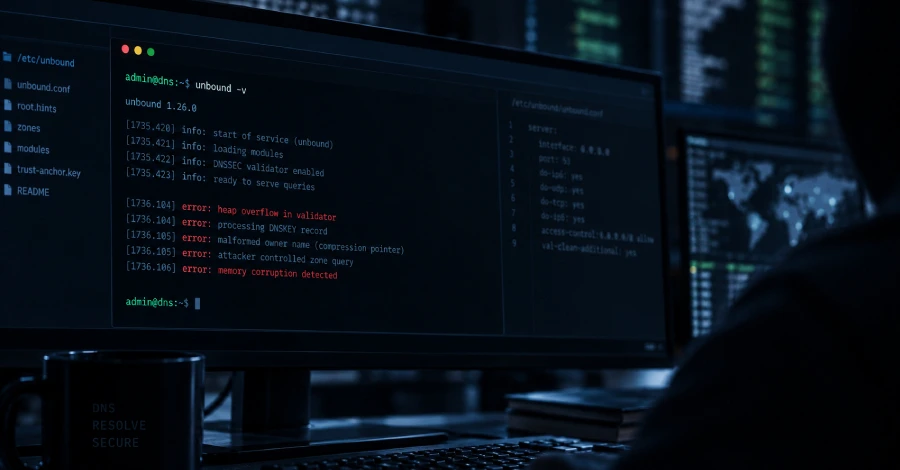
A newly disclosed CVE can immediately trigger alerts across security tools, but a vulnerability’s severity rating alone does not determine whether attackers can successfully exploit it within a particular organization.
As AI-assisted offensive capabilities continue to accelerate vulnerability exploitation, security teams are under increasing pressure to determine which newly discovered flaws represent an actual and immediate threat to their environments.
A forthcoming cybersecurity webinar will examine how organizations can move beyond vulnerability severity scores and establish whether a vulnerability is genuinely exploitable in their own infrastructure.
Why CVE Severity Is Not Enough
A high CVSS score indicates that a vulnerability could have serious consequences, but it does not automatically mean that every affected system can be compromised.
Security teams need to establish several additional facts, including:
- Whether the vulnerable asset is accessible to potential attackers
- What attack techniques are required to exploit the vulnerability
- Whether existing security controls can prevent those techniques
- Whether the vulnerability remains exploitable under the organization’s specific conditions
This process can provide a more practical assessment of risk than relying exclusively on a numerical severity score.
AI Is Changing the Vulnerability Timeline
The emergence of increasingly capable AI systems is shortening the time between vulnerability disclosure and the development of functional attack techniques.
This creates a challenge for organizations that validate vulnerabilities on weekly, monthly or quarterly schedules.
When attackers can potentially move from a newly disclosed CVE to exploitation more rapidly, defenders need ways to determine exposure and validate security controls without waiting for lengthy testing cycles.
Webinar to Demonstrate CVE Validation
The webinar, titled “How to Prove You’re Ready for Mythos-Class Attacks,” will feature Ishak Celikkanat, Solutions Architect Lead at Picus.
The session will demonstrate a workflow designed to help security teams determine whether vulnerabilities can actually be exploited within their environments.
Rather than treating vulnerability severity as the final risk assessment, the approach focuses on connecting vulnerabilities with the attack techniques required to exploit them and testing whether existing defensive controls can stop those behaviors.
Testing Without Running Dangerous Exploits
Directly executing exploit code against production systems can introduce additional risks.
Organizations may therefore need alternative methods for determining whether their security controls would block the techniques associated with a vulnerability.
The webinar will demonstrate how teams can map a vulnerability to its relevant attack behaviors and validate those behaviors against existing security controls.
This can help organizations gather evidence about whether a vulnerability is effectively blocked or remains exploitable without necessarily deploying potentially disruptive exploit code against production infrastructure.
Building a Faster Validation Process
The central idea behind the approach is to replace assumptions with evidence.
Instead of treating every high-severity CVE as equally exploitable, security teams can examine the specific conditions required for an attack and determine whether those conditions exist in their environments.
A faster validation process can help organizations focus remediation efforts on vulnerabilities that present demonstrated exposure while also confirming where existing controls provide effective protection.
Why Rapid Validation Matters
Modern enterprise environments can change quickly. New applications, cloud services, configurations and internet-facing assets can alter an organization’s exposure between vulnerability assessments.
If the environment changes faster than the organization’s validation process, security teams may be working with outdated assumptions about their actual risk.
The webinar will therefore focus on creating a more continuous approach to vulnerability validation and determining whether defensive controls can withstand emerging attack techniques.
Organizations interested in improving their vulnerability and exposure-management processes can register for the session and access the recording if they cannot attend the live event.